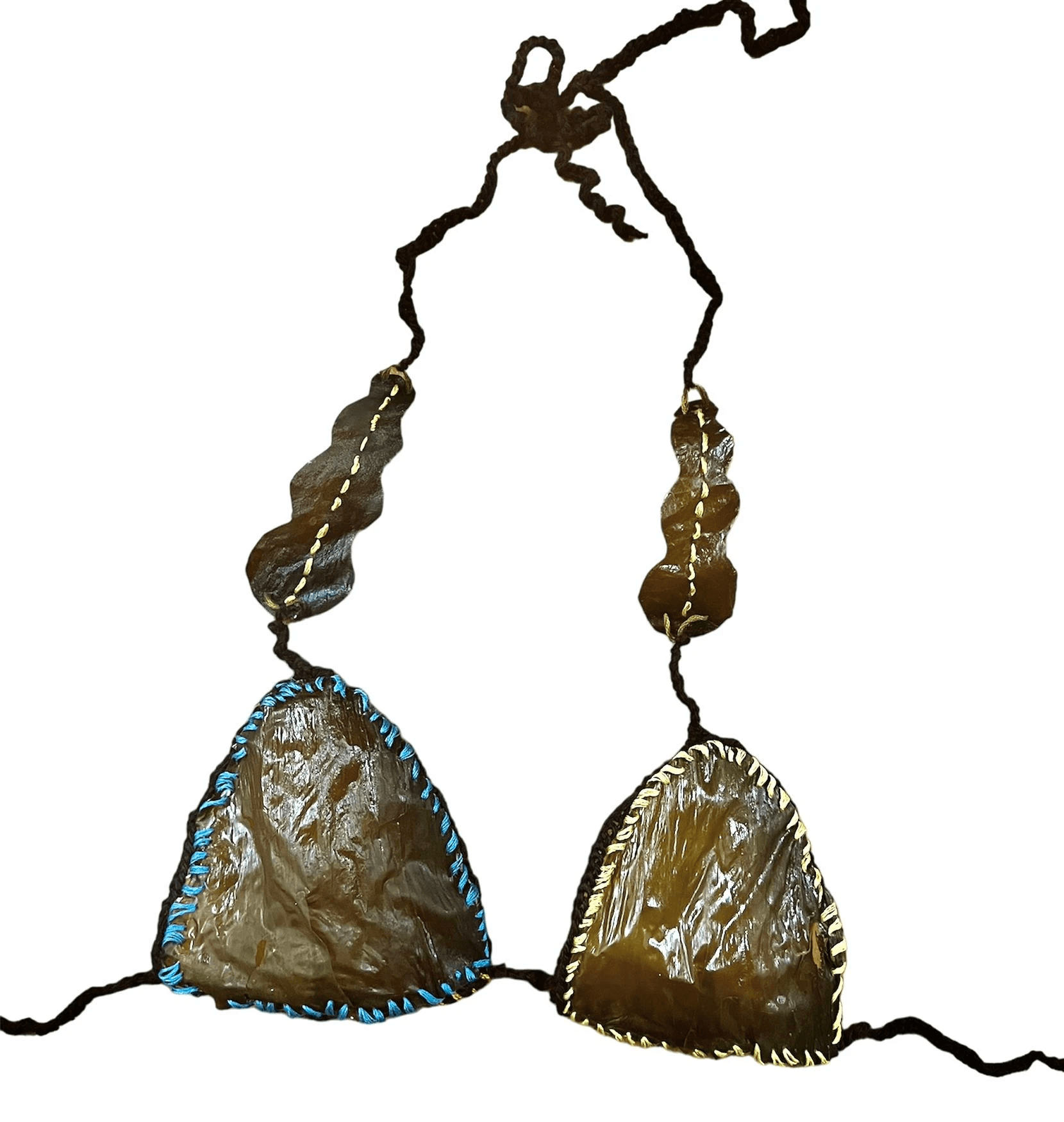
Seaweed Bikini
Role:
Independent Researcher
Industry:
Sustainable Fashion
Problem
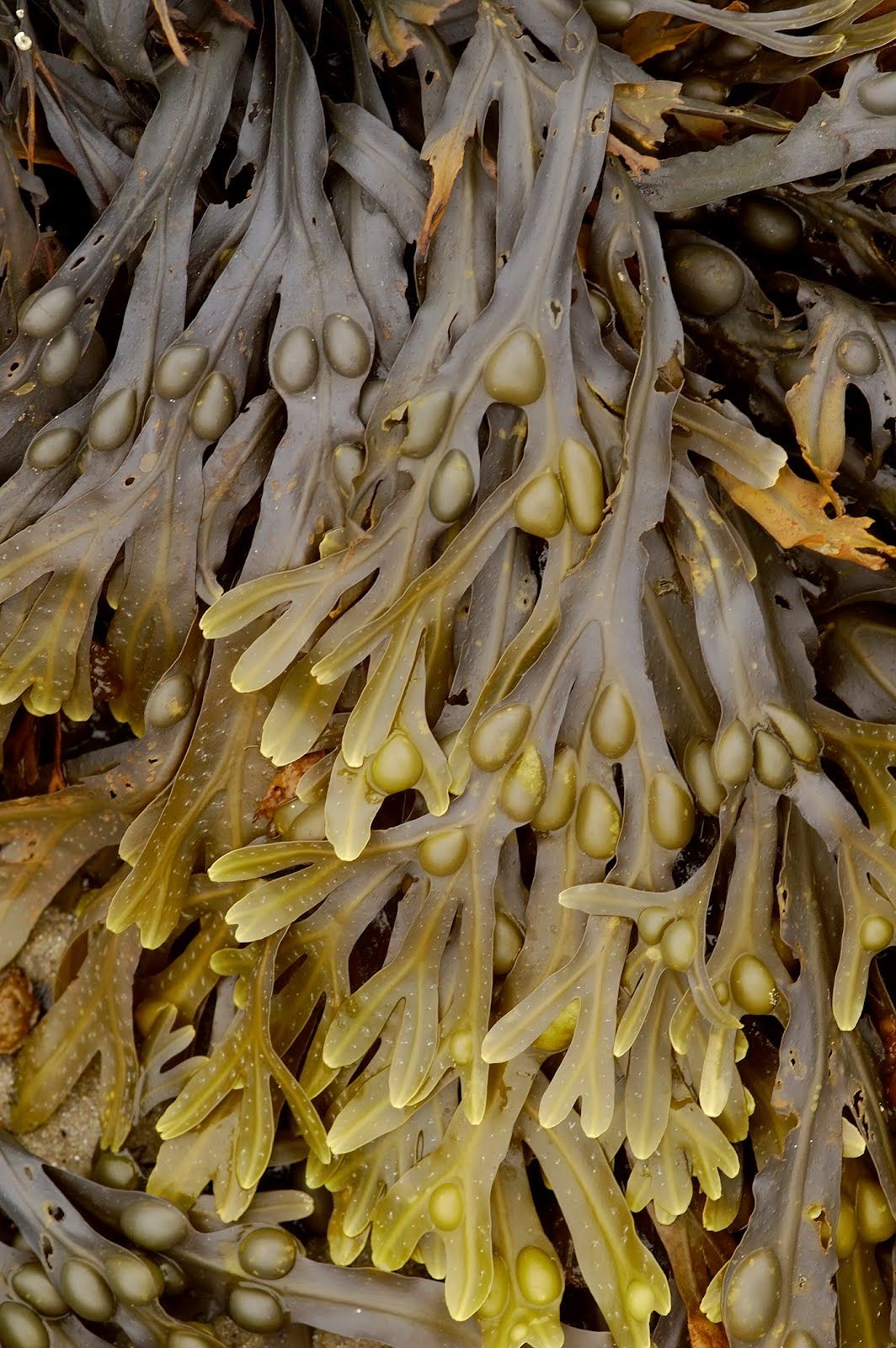
Recurring sargassum blooms along Miami’s coastline have disrupted ecosystems, tourism, and community access to beaches. At the same time, the fashion industry continues to rely on materials that contribute to deforestation, pollution, and high carbon emissions.
Despite seaweed’s known ecological and bioactive properties, it remains largely underexplored as a material resource within fashion and apparel systems.
Approach
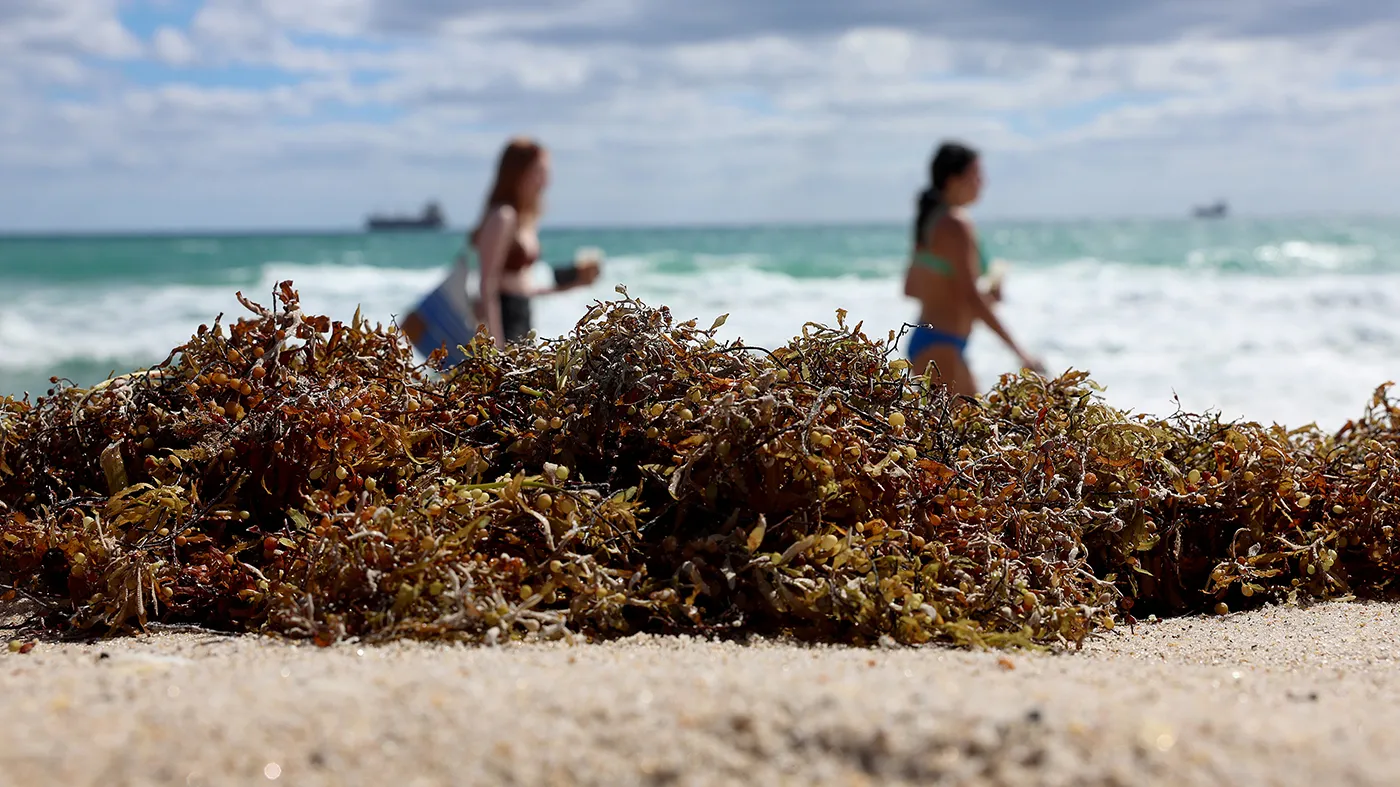
Conducted literature reviews on sargassum ecology, bioactive compounds, and material properties
Analyzed the environmental impact of traditional leather and synthetic textile alternatives
Studied precedents in bio-based and algae-derived materials
Developed a repeatable fabrication process linking environmental waste to material innovation
Framed findings through a circular economy and sustainable design lens
Execution
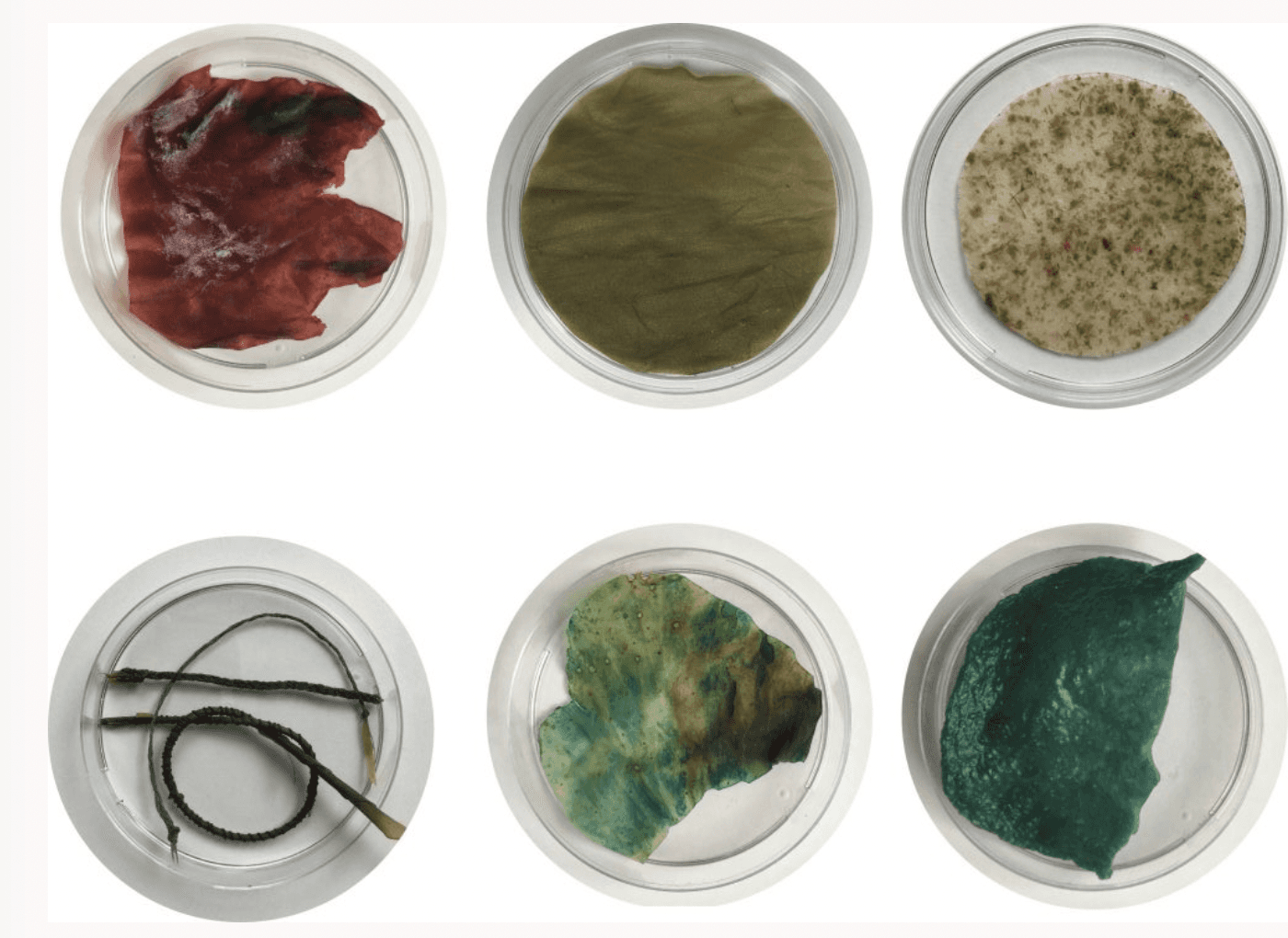
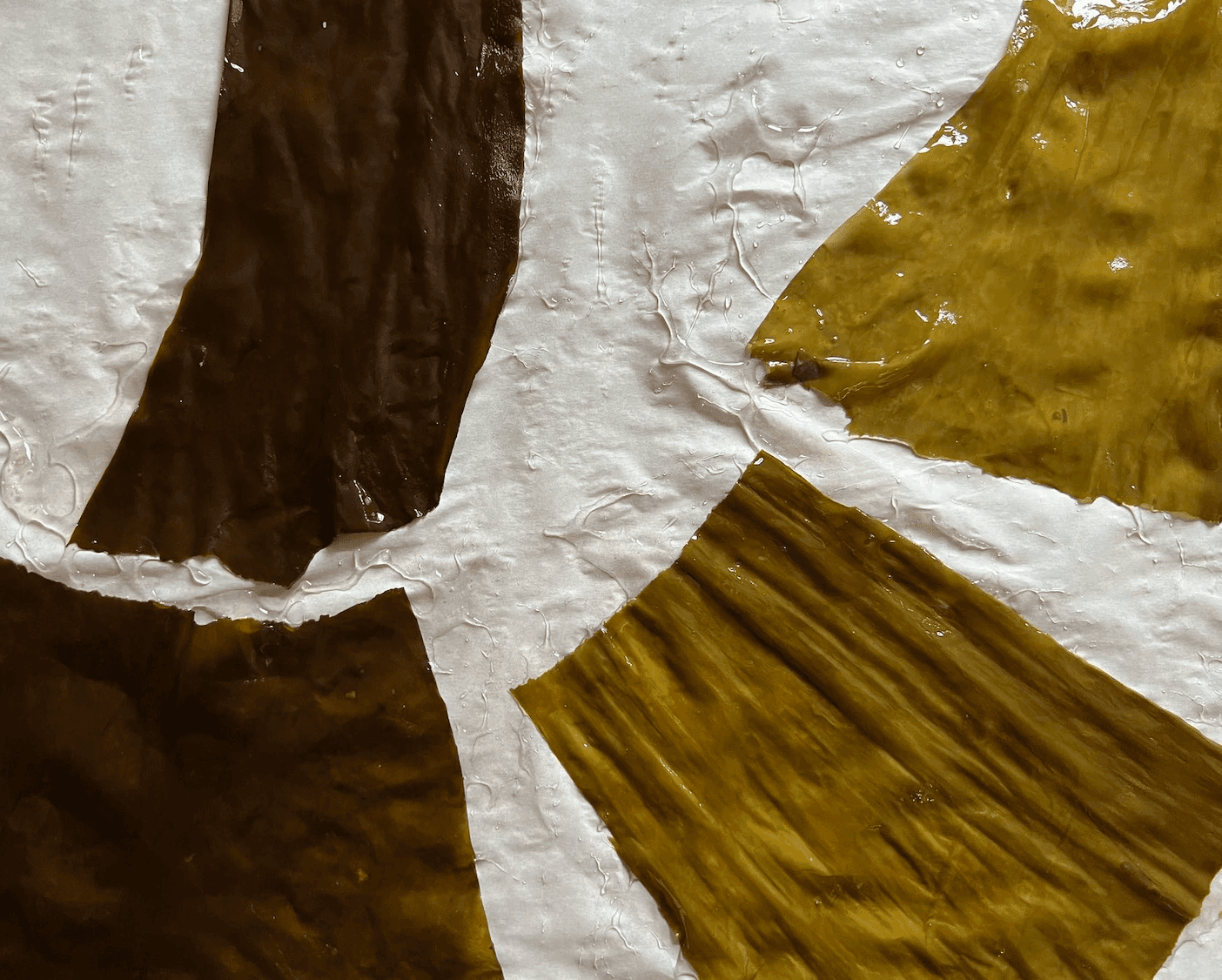
Developed a step-by-step fabrication process using sargassum, glycerol, and tapioca starch
Experimented with drying methods, thickness control, and flexibility to produce usable material sheets
Sewed a functional seaweed leather bikini prototype to test wearability and structural limits
Documented fabrication challenges, including material uniformity, durability, and scalability constraints
Consolidated findings into a comprehensive research document outlining limitations and future pathways
Impact
Demonstrated the feasibility of seaweed leather as a low-impact textile alternative
Reframed an environmental waste problem as an opportunity for material innovation
Produced a wearable prototype validating real-world application potential
Established a foundation for future research into scalability, supply chains, and policy support
Positioned seaweed leather within a broader circular economy framework for fashion